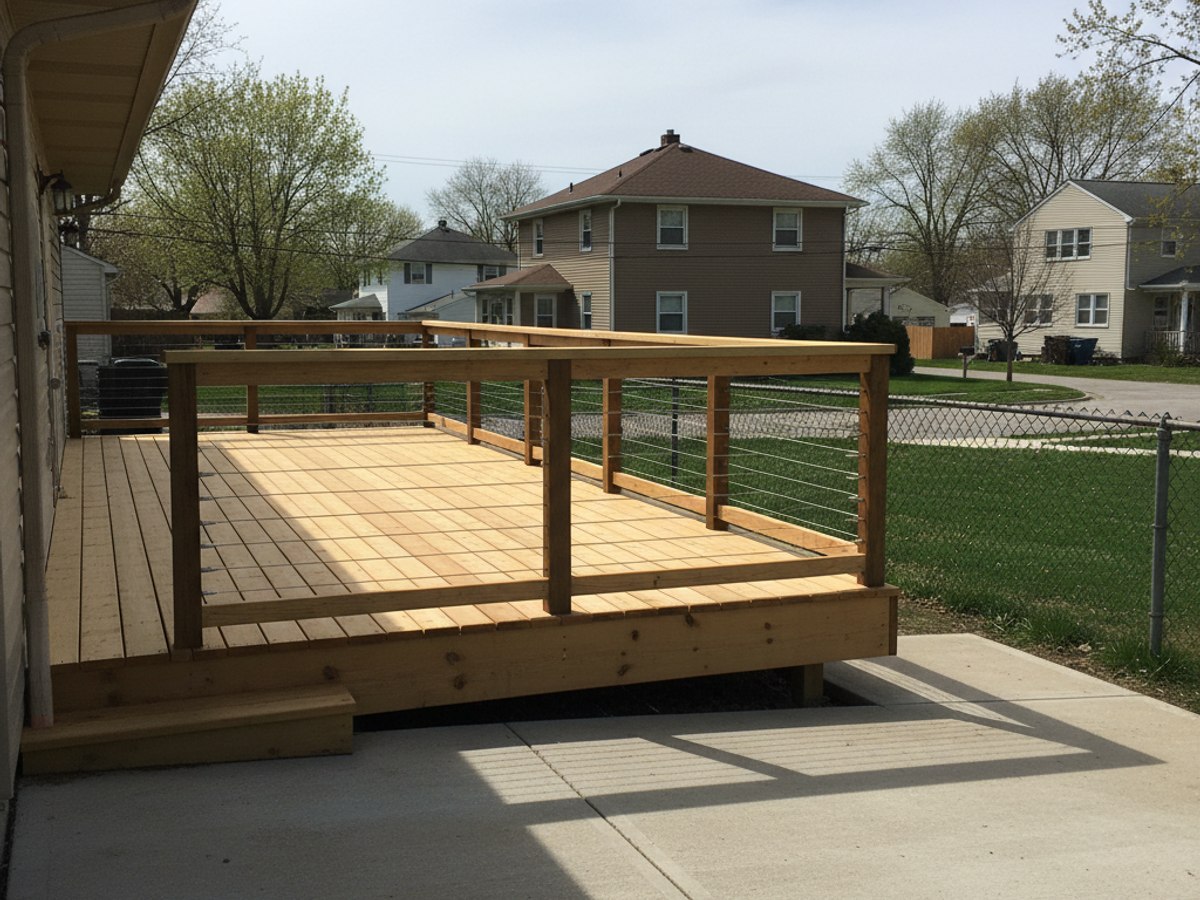
Every deck job in Brooklyn runs into the same borough-specific problems eventually. The lot is narrow, the yard has forty years of buried surprises, and the building next to yours was probably put up before anyone thought to write down what's in the ground. Here's what's worth looking at before anyone starts digging footings or tearing into an old ledger board.
1. What's actually under the yard. A lot of rear yards in Brooklyn, especially closer to the water in Red Hook, Greenpoint, and parts of Williamsburg, sit on fill rather than natural soil. Further inland in Flatbush or Midwood you're more likely dealing with glacial till, which is denser and drains better but can still hold water after a heavy rain. Either way, don't assume the first three feet are clean. Old coal ash, brick rubble from a demolished outbuilding, and buried construction debris are common.
2. Old oil tanks. Plenty of Brownstone-era houses ran on oil heat before converting to gas, and the tank sometimes stayed in the ground when the system changed over. If a post hole hits one, the job stops until it's dealt with properly, and that's not cheap or fast. Worth asking the seller or a past owner if there was ever an oil tank, and worth having the contractor probe before digging footings in an older yard.
3. Footing depth for frost. New York City code requires footings to go below the frost line, which in this area generally means 36 to 42 inches. A footing poured at 18 inches might look fine in October and start heaving by February once the ground freezes and thaws a few times. Brooklyn doesn't get Minnesota winters, but we still get enough freeze-thaw cycles most years to move a shallow post out of plumb.
The ledger board problem specific to rowhouses
Most decks attached to a house rely on a ledger board bolted into the rim joist. That works fine on wood-framed construction. It does not work the same way on a lot of Brooklyn rowhouses, where the rear wall is brick, sometimes structural masonry and sometimes brick veneer over an older wood frame that's seen better days. Bolting a ledger straight into a brick veneer wall without knowing what's behind it is how you end up with a deck that's only as strong as a few inches of old mortar. On houses like this it's often better to build the deck freestanding, carried on its own posts and beams, with the house wall doing none of the structural work. That costs a bit more in lumber but it takes the guesswork out of the connection.
Permits, property lines, and landmark districts
Most attached decks in New York City need a Department of Buildings permit, and that usually means a filed drawing showing the footprint, height, and how it ties into the house. If the deck pushes close to a property line, a current survey matters, because a lot of older Brooklyn lots have fences and sheds that have drifted from the actual boundary over the decades. In Park Slope, Cobble Hill, Fort Greene, Carroll Gardens, and other designated historic districts, a rear deck visible from a neighboring lot or the street can trigger Landmarks Preservation Commission review on top of the standard DOB process, even though it's in the back yard. That review adds time, so it's worth finding out early whether the block is landmarked rather than discovering it after materials are ordered.
What the weather does to materials here
- Pressure-treated lumber for framing holds up fine, but the fasteners matter more than people think. In the parts of Brooklyn closer to the water, Coney Island, Sheepshead Bay, Gerritsen Beach, salt air speeds up corrosion on anything less than stainless or coated deck screws, and you'll see rust streaks on the decking within a couple seasons if cheap fasteners were used.
- Composite decking expands and contracts with heat more than wood does. A Brooklyn summer with stretches in the 90s will move a composite board noticeably, so gapping between boards during installation has to account for that or you get buckling the next July.
- Humidity in July and August slows down stain and sealant cure times. A film that would dry in four hours upstate can take most of a day here if the air's thick. Anyone staining a deck in peak summer should plan for that and not walk on it too soon.
None of this means Brooklyn is a bad place to build a deck. It just means the materials have to be matched to actual conditions here rather than a generic spec sheet.
Drainage, grading, and where the water goes
A lot of Brooklyn back yards are nearly flat, sometimes sloped slightly toward the house instead of away from it, which was fine when the yard was just grass but matters once you put a structure on it. Water running off a deck surface needs somewhere to go that isn't straight into a basement window well or a neighbor's fence line. On older blocks the storm drainage in the street is already working hard during a heavy downpour, so a yard that sheds water poorly can hold standing puddles for a day or two after a summer storm. Checking the grading before footings go in, and sometimes adding a simple drain or adjusting the slope under the deck, saves a bigger problem later.
Access and what the job does to the block
Plenty of Brooklyn lots have no side access at all, which means lumber, concrete bags, and tools go through the house, out a back door, or over a fence with a neighbor's permission. That changes how a demolition or a full rebuild gets scheduled, because you can't just back a truck up to the work like you could on a suburban lot. It's worth asking a contractor directly how they plan to move material in and old decking out, especially on a block with no driveway and tight street parking.
None of these ten things are complicated on their own. Taken together they're the reason a deck job in Brooklyn needs someone who's actually worked this ground, these rowhouse walls, and this permit process before, not just someone who builds decks well somewhere else. That's the kind of local knowledge behind our deck builder work at Ace Deck Solutions.