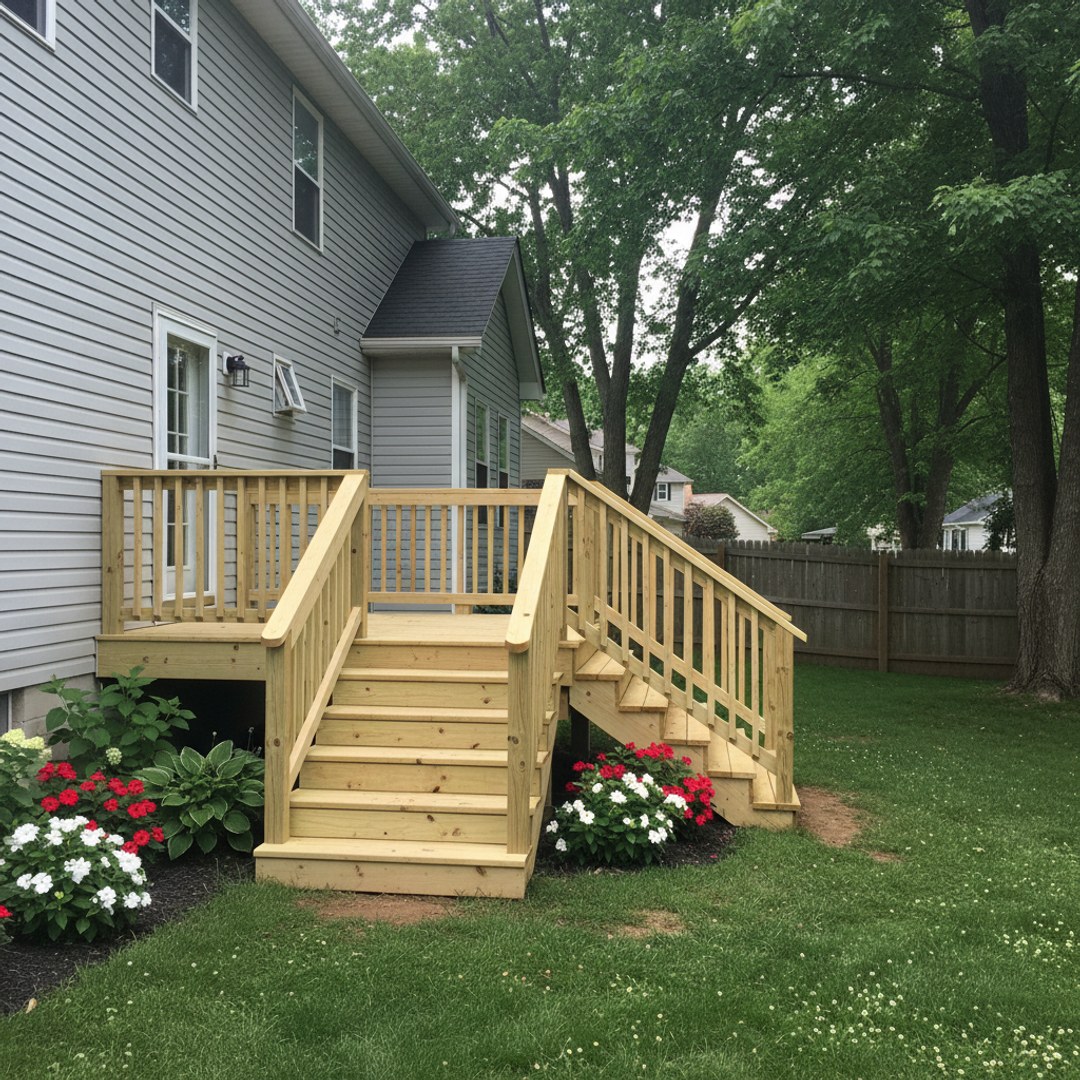
Homeowners usually ask this question backwards. They want to know the best month to call a deck builder, when really the answer depends on which part of the job you're talking about. Framing a deck, pouring footings, and staining the boards each have their own weather window, and in Brooklyn those windows don't line up the way you'd think.
Concrete footings care about frost. Wood cares about moisture. Stain cares about humidity and surface temperature. You can build a deck frame in February if the ground isn't frozen solid, but you'd be foolish to stain it that same week. Here's how it actually breaks down.
Footings have to beat the frost line, not the calendar
New York City's building code requires footings to sit below the frost depth, which in this area runs around 36 inches. That's not a suggestion, it's what keeps a footing from heaving when the ground freezes and pushes upward in January and thaws again in March. Dig a shallow footing and by year two your deck is rocking slightly at one post, because frost jacked it a half inch and it never fully settled back.
This means footing work is best done when the ground is workable and not saturated, which in Brooklyn is usually April through early June, or September into November. Dead summer is fine too, but a lot of contractors are booked solid then. Winter pours are possible with extra precautions if the ground isn't frozen, but it's not the easy season to get a clean, square dig.
What's actually in the ground depends on which part of Brooklyn you're in
This matters more here than most homeowners realize. Neighborhoods sitting on the old terminal moraine, places like Park Slope, Windsor Terrace, and parts of Crown Heights, tend to have denser glacial till, sometimes with buried rock and old rubble from construction a century ago. Digging a footing there is slower but the soil holds a post well once you're past the fill layer.
Head south toward Canarsie, Mill Basin, Bergen Beach, or Gerritsen Beach, and you're often in reclaimed marshland with sandy fill and a high water table. Dig a 36-inch footing hole there in a wet spring and you may hit standing water before you hit solid bearing soil. That changes how we pour, sometimes meaning a wider footing or a different concrete mix to deal with the moisture. It also means timing the pour for a drier stretch matters more in those neighborhoods than it does up on the ridge.
Summer heat and humidity work against stain, not against framing
July and August in Brooklyn run hot and sticky, and that's murder on a stain or sealant job. Most exterior wood finishes want the surface between 50 and 90 degrees, with no rain in the forecast for 24 to 48 hours after application. High humidity slows the cure and can leave a tacky film that traps dust and foot traffic marks before it's actually hardened. We see this most on north-facing decks that don't get direct sun to help the finish flash off.
Framing and structural repair don't care about any of that. A hot July day is fine for setting joists, swapping out a rotted ledger board, or tearing out old decking. The lumber itself doesn't mind the heat, your crew minds it more than the wood does.
Fall is the quiet favorite, and it's not close
September through early November is usually the best stretch for any finish work in Brooklyn. Humidity drops from the summer swamp, temperatures stay in a range where stain actually cures properly, and you're not racing an afternoon thunderstorm the way you are in July. It's also before the first hard frost, so if you're staining pressure-treated lumber that was just installed, you've got time for the wood to dry out to the right moisture content first. New PT lumber is often still wet from the treatment process and needs weeks, sometimes a season, to dry before stain will actually bond instead of sitting on the surface and peeling off the following spring.
Spring has the opposite problem. Everyone wants their deck ready for Memorial Day, so spring is booked, but spring is also wetter, and a lot of new PT lumber installed in April hasn't dried enough to take stain well in May. If you're building new, spring framing with a fall stain job the following year is actually a better sequence than people expect.
Permits don't run on a season, but they do run on a clock
Most deck work attached to the house, or any deck more than roughly 30 inches off grade, needs a permit through the NYC Department of Buildings, and that process doesn't speed up because it's June. Plan filing, zoning and setback checks against your lot line, and the inspection itself can add real time before a shovel goes in the ground. Older rowhouse lots in central Brooklyn sometimes have surprises too, like a prior deck or shed that was never permitted, which has to get sorted before new work gets approved. If you want to build for a summer deadline, the permit application should go in well before the weather even turns.
So what's the real answer
If you're building new, start the permit and design process in winter, dig footings in spring once the ground drains, frame through summer, and stain in fall once the wood has dried out. If you're repairing or replacing boards, that can happen almost any time the ground isn't frozen. If you're just staining an existing deck, aim for September or October and skip the humid months entirely. Demolition and removal don't care about weather at all, so that's the one job you can schedule purely around your own calendar.
We handle all of it at Ace Deck Solutions, and when a homeowner calls asking about timing, the honest answer is usually some version of what's above, not just "whenever works for you."